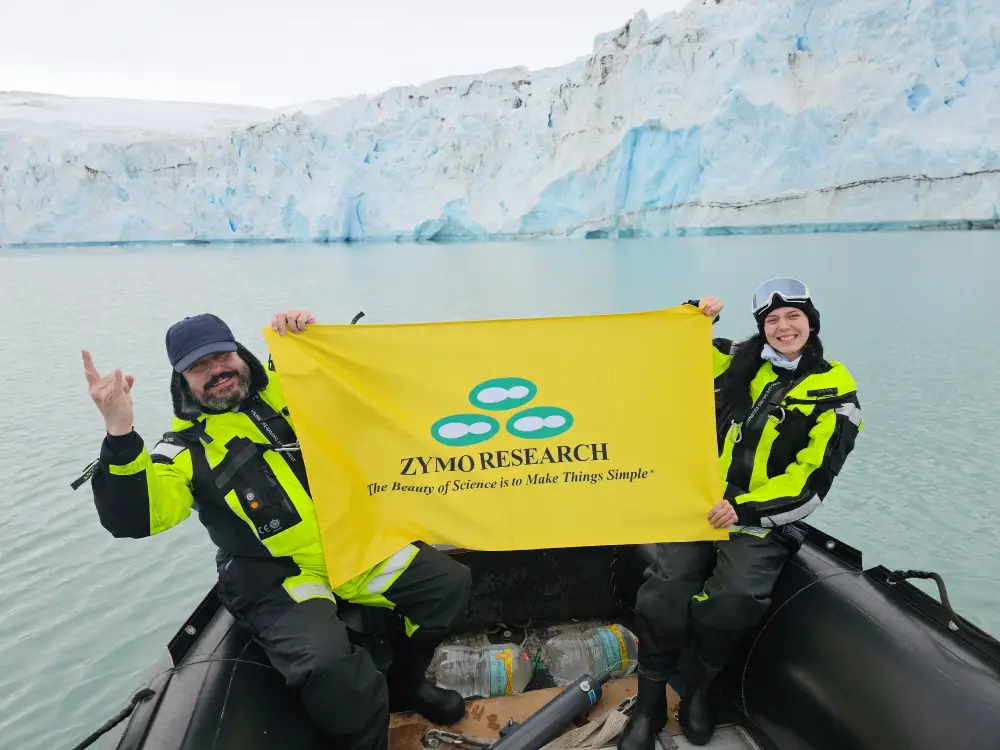
Revealing the Hidden Microbial Worlds of South Bay, Livingston Island
When we think of Antarctica, images of ice floes, stark white landscapes, glaciers and penguins often come to mind. But beneath the icy surface of its coastal waters lies an invisible world - diverse communities of microorganisms that quietly sustain polar ecosystems. These microscopic life forms are not only crucial for nutrient cycling but may also carry unique traits with potential applications in biotechnology, medicine, and industry.
A recent project set out to shine a light on these hidden microbial worlds. Using next-generation sequencing (NGS), researchers investigated the microflora of South Bay, Livingston Island, extending their study to nearby islands and the open waters of the Bransfield Strait. By sampling at different depths, they were able to map how microbial communities shift both across space and down the water column - from surface waters to 50 meters below.
Mapping Microbial Diversity
Across Space and Depth
To capture this diversity, scientists collected water from four distinct layers:
- Surface waters
- 5 meters below
- 30 meters, the so-called “deep chlorophyll maximum,” where photosynthetic activity peaks
- 50 meters, beneath the chlorophyll layer in colder, darker waters
Samples were taken not only in South Bay but also from the volcanic caldera of Deception Island, Snow Island, Half Moon Island, and the open Bransfield Strait. This design allowed the scientific team to see how microbial life changes with both depth and geography.
From Seawater to DNA
Back in the field lab, microorganisms were captured using 0.2 μm filters, which trap even the smallest bacteria. Extracting DNA in such remote conditions is no easy task, but specialized kits from Zymo Research did allow for the recovery of high-quality nucleic acids directly from these filters.
- The Quick-DNA™ Fecal/Soil Microbe Miniprep Kit, optimized for handling complex environmental samples where inhibitors can be an issue.
- The Quick-DNA/RNA Water Kit, tailored for aquatic samples, ensuring efficient recovery.
- The DNA/RNA Shield™ reagent, ideal to safeguard sample backups and protecting the genetic material during transport.
This careful preparation meant the DNA was ready for sequencing without compromising quality - a critical step in ensuring reliable results from such high-value and limited samples.
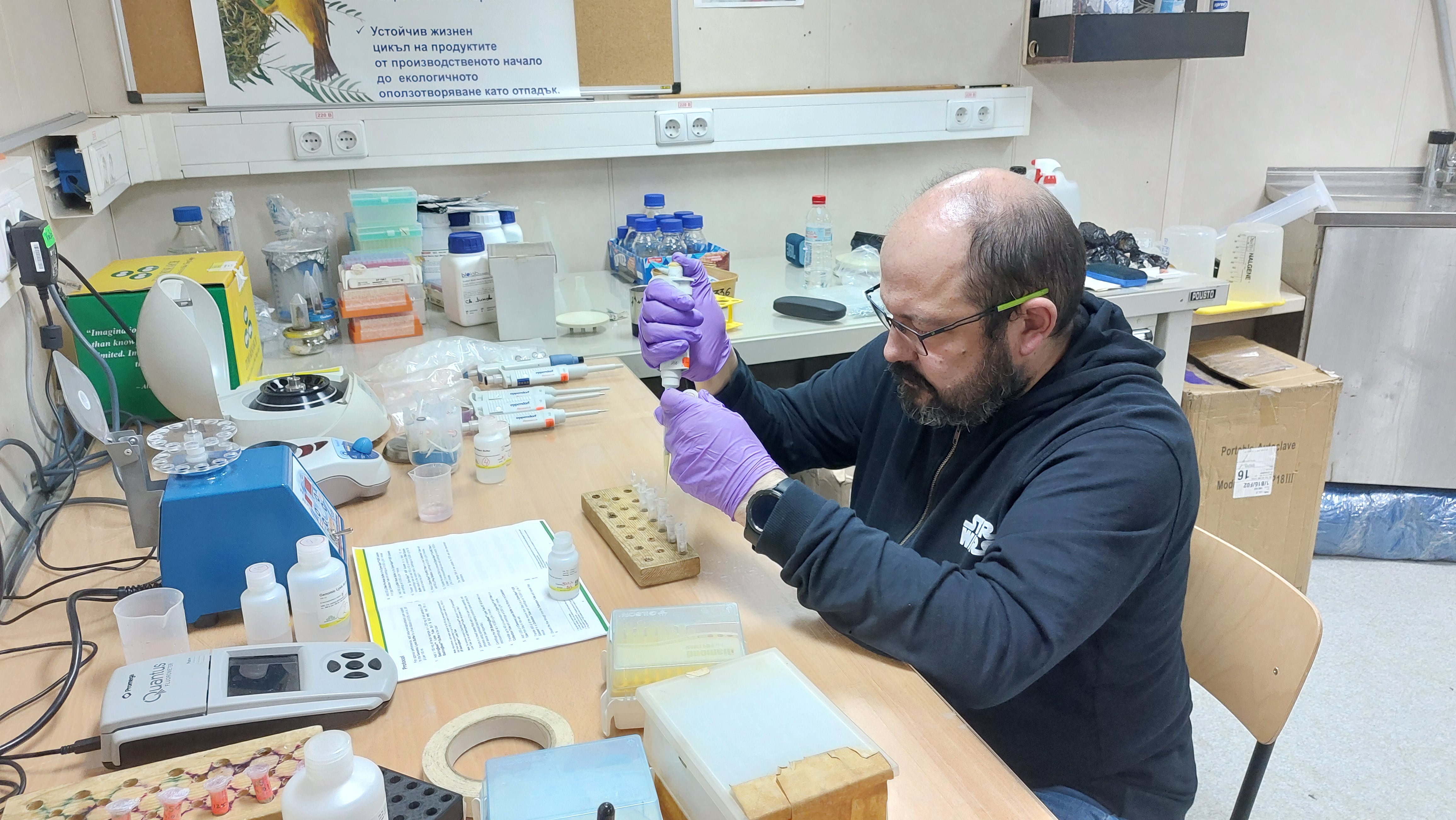
Sequencing the Unseen
With DNA in hand, researchers applied two complementary approaches:
- Amplicon-based metagenomics, to identify the organisms present by targeting specific genetic markers.
- Shotgun metagenomics, to reveal not only who is there but what they might be capable of - from nutrient cycling to producing unique bioactive compounds.
Together, these methods provided both a broad overview and fine-grained detail of microbial life in Antarctic waters.
Implications for Science and Biotechnology
The Antarctic marine microbiome is more than a curiosity. These microorganisms:
- support ecosystems by driving key biogeochemical cycles.
- offer biotechnological promise, with enzymes and metabolites adapted to extreme cold.
- serve as environmental sentinels, reflecting how climate change and human impact may alter even the most remote ecosystems.
Every layer of water sampled in South Bay represents not just microbial diversity, but also a window into global processes that ripple far beyond Antarctica.
Conclusion
Antarctica’s icy waters may seem lifeless at first glance, but under the surface lies a dynamic microbial world - one that scientists are only beginning to uncover. By pairing careful fieldwork with powerful sequencing technologies, researchers are mapping microbial life across South Bay and beyond, while also turning their attention to the emerging challenge of antibiotic resistance in wildlife.
These projects remind us that even in the most remote corners of the planet, microorganisms are both guardians of ecosystems and potential harbingers of change. In every droplet of Antarctic water, entire stories of life - and future discoveries - are waiting to be told.
Looking Ahead: Antarctic Wildlife Resilience
Preliminary findings suggest that Antarctic wildlife may harbor unexpected antibiotic resistance. In January 2022, fecal samples from an Antarctic fur seal and a gentoo penguin on Livingston Island revealed glycopeptide resistance genes (vanA/vanD and vanB), with the penguin sample also testing positive for mecA and blaNDM. These results, obtained using field-adapted Quick-DNA Fecal/Soil Microbe MiniPrep Kit protocols, indicate potential ocean-mediated spread of antibiotic-resistant bacteria even in remote Antarctic locations.
Building on this, an ongoing project will systematically investigate the resilience of Antarctic wildlife, analyzing seals, penguins, and krill. While preliminary, these studies promise to complement marine microbiome research by revealing how human-impacted microbes may infiltrate polar ecosystems.